50-141-29
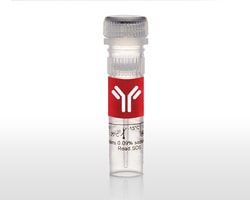
Armenian Hamster IgG Isotype Control (eBio299Arm), PE-Cyanine5, eBioscience™, Invitrogen™
Manufacturer: Invitrogen
Select a Size
| Pack Size | SKU | Availability | Price |
|---|---|---|---|
| Each | 50-141-29-Each | In Stock | ₹ 18,451.01 |
50-141-29 - Each
In Stock
Quantity
1
Base Price: ₹ 18,451.01
GST (18%): ₹ 3,321.182
Total Price: ₹ 21,772.192
Antigen
Armenian Hamster IgG
Clone
eBio299Arm
Conjugate
PE-Cyanine5
Gene Alias
IgG; Immunoglobulin G; ImmunoglobulinG
Purification Method
Affinity chromatography
Regulatory Status
RUO
Target Species
Not Applicable
Form
Liquid
Applications
Control, Flow Cytometry
Concentration
0.2 mg/mL
Formulation
PBS with 0.09% sodium azide; pH 7.2
Host Species
Armenian Hamster
Quantity
100 μg
Primary or Secondary
Isotype Control (Primary)
Content And Storage
4° C, store in dark, DO NOT FREEZE!
Isotype
IgG
Related Products

Description
- Description: The eBio299Arm monoclonal antibody is useful as an isotype control immunoglobulin
- Applications Reported: This eBio299Arm antibody has been reported for use in flow cytometric analysis
- Applications Tested: This eBio299Arm antibody has been tested by flow cytometric analysis
- Isotype control should be used at the same concentration as experimental antibody
- Excitation: 488-561 nm; Emission: 667 nm; Laser: Blue Laser, Green Laser, Yellow-Green Laser
- Filtration: 0.2 μm post-manufacturing filtered
- The isotype of a primary antibody and the application it is being used in can result in background staining
- Primary antibody background noise can be caused by binding to Fc receptors on target cells; by non-specific interactions with cellular proteins, carbohydrates, and lipids; or by cell autofluorescence
- Isotype control antibodies can act as negative controls to help differentiate non-specific background signal from specific antibody signal because they have no relevant specificity to a target antigen
- While isotype controls are most commonly used in flow cytometry, they are useful in other applications such as chromatin immunoprecipitation (ChIP), immunohistochemistry, and gel shifts
- Isotype controls should match with the primary antibody species and isotype so that the level of specific staining by the primary antibody may be accurately determined
- If using directly labeled primary antibodies, the isotype control works best if conjugated with the same label as the test antibody.