79-471-481
Mouse IgG1 kappa Isotype Control (P3.6.2.8.1), Pacific Orange™, eBioscience™, Invitrogen™
Manufacturer: Invitrogen
Select a Size
| Pack Size | SKU | Availability | Price |
|---|---|---|---|
| Each of 1 | 79-471-481-Each-of-1 | In Stock | ₹ 22,074.48 |
79-471-481 - Each of 1
In Stock
Quantity
1
Base Price: ₹ 22,074.48
GST (18%): ₹ 3,973.406
Total Price: ₹ 26,047.886
Antigen
Mouse IgG1 kappa
Clone
P3.6.2.8.1
Conjugate
Pacific Orange
Gene Alias
IgG1; Igh-4; Ighg1; Immunoglobulin G; Immunoglobulin G1; immunoglobulin heavy constant gamma 1 (G1m marker); ImmunoglobulinG; ImmunoglobulinG1; VH7183
Purification Method
Affinity chromatography
Regulatory Status
RUO
Target Species
None
Form
Liquid
Applications
Control, Flow Cytometry, Immunohistochemistry
Concentration
0.2 mg/mL
Formulation
PBS with 0.09% sodium azide; pH 7.2
Host Species
Mouse
Quantity
50 μg
Primary or Secondary
Isotype Control (Primary)
Content And Storage
4° C, store in dark, DO NOT FREEZE!
Isotype
IgG1 κ
Related Products

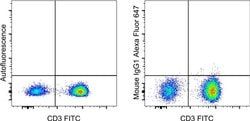
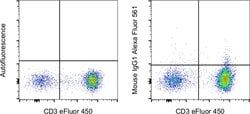

Description
- Description: The monoclonal mouse IgG1 K immunoglobulin is useful as an isotype control
- Applications Reported: Mouse IgG1 kappa Isotype Control Pacific Orange has been reported for use in flow cytometric analysis, immunocytochemistry (ICC) and immunohistochemistry (IHC)
- Applications Tested: This Mouse IgG1 kappa Isotype Control can be used at the same concentration as the experimental antibody
- Pacific Orange emits at 551 nm and is excited with the violet laser line (405 nm)
- Please make sure that your instrument is capable of detecting this fluorochrome
- Excitation: 405 nm; Emission: 551 nm; Laser: Violet Laser Mouse IgG1 is a subtype of immunoglobulin G antibody that is produced by B cells in response to an antigen
- It is the most abundant IgG subtype in the serum and plays a crucial role in the adaptive immune response
- Mouse IgG1 is composed of two heavy chains and two light chains, and it is involved in opsonization, complement activation, and antibody-dependent cell-mediated cytotoxicity
- It is also involved in the regulation of immune responses, including the activation of T cells and the inhibition of B cell activation
- Mouse IgG1 is widely used in research and diagnostic applications, including ELISA, Western blotting, and immunohistochemistry
- It is also used in therapeutic applications, such as immunotherapy and vaccine development.