P6516
Poly-L-lysine hydrobromide
suitable for cell culture, Mol wt ≤15,000 by MALLS
Manufacturer: Sigma Aldrich
CAS Number: 25988-63-0
Synonym(S): L-Lysine homopolymer hydrobromide
Select a Size
| Pack Size | SKU | Availability | Price |
|---|---|---|---|
| 25 MG | P6516-25-MG | In Stock | ₹ 4,972.80 |
| 100 MG | P6516-100-MG | In Stock | ₹ 14,485.50 |
| 500 MG | P6516-500-MG | In Stock | ₹ 41,103.30 |
| 1 G | P6516-1-G | In Stock | ₹ 67,743.30 |
P6516 - 25 MG
In Stock
Quantity
1
Base Price: ₹ 4,972.80
GST (18%): ₹ 895.104
Total Price: ₹ 5,867.904
form
solid
Quality Level
200
mol wt
≤15,000 by MALLS 4,000-15,000 by viscosity
greener alternative product score
old score: 51new score: 43Find out more about DOZN™ Scoring
greener alternative product characteristics
Designing Safer ChemicalsSafer Solvents and AuxiliariesReduce DerivativesLearn more about the Principles of Green Chemistry.
sustainability
Greener Alternative Product
technique(s)
cell culture | mammalian: suitable
color
white to off-white
application(s)
cell analysis
greener alternative category
, Re-engineered
Other Options
| Image | Product Name | Manufacturer | Price Range | |
|---|---|---|---|---|
Electron Microscopy Sciences Poly-L-Lysine 0.1% Solution, 25988-63-0, 10ml | -- | ₹ 3,422.40 | ||
Sigma Aldrich Fine Chemicals Biosciences Poly-L-lysine Solution | 25988-63-0 | MFCD00165424 | 500ml | -- | ₹ 55,340.21 | ||
Sigma Aldrich Fine Chemicals Biosciences Poly-L-lysine solution | 25988-63-0 | MFCD00165424 | 100 mL | -- | ₹ 16,455.75 | ||
Supply Solutions Poly-L-lysine solution, 25988-63-0, MFCD00165424, 50mL | -- | ₹ 12,423.31 | ||
Poly-L-lysine hydrobromide | -- | ₹ 6,490.00 - ₹ 1,02,641.70 | ||
Poly-L-lysine hydrobromide | -- | ₹ 7,040.00 - ₹ 77,011.80 | ||
Poly-L-lysine hydrobromide | -- | ₹ 7,004.10 - ₹ 68,609.10 | ||
Poly-L-lysine hydrobromide | -- | ₹ 7,703.40 - ₹ 72,405.30 | ||
Poly-L-lysine hydrobromide | -- | ₹ 6,216.00 - ₹ 69,408.30 | ||
Poly-L-lysine hydrobromide | -- | ₹ 5,183.70 - ₹ 68,331.60 |
Related Products
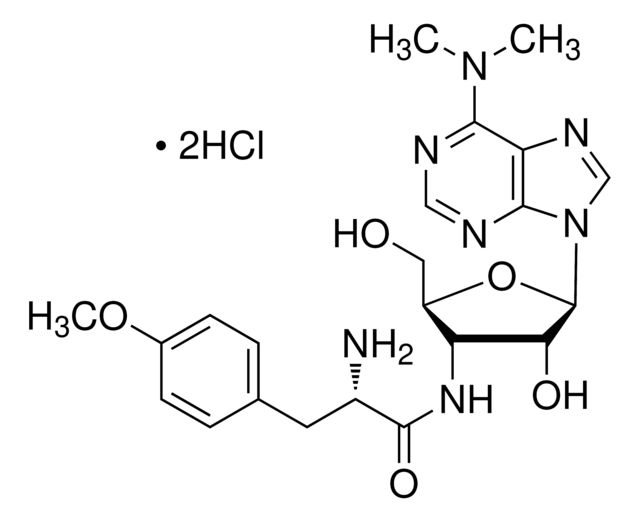
Description
- General description: We are committed to bringing you Greener Alternative Products, which adhere to one of the four categories of Greener Alternatives . This product belongs to category of Re-engineered products, showing key improvements in Green Chemistry Principles “Designing Safer Chemicals”, "Safer Solvents and Auxiliaries" and “Reduce Derivatives”. Click here to view its DOZN scorecard.
- Application: Poly-L-lysine polymers can be used in promoting cell adhesion to solid substrates, conjugation to methotrexate for increased drug transport, microencapsulation of islets, cell microencapsulation technology, microarray glass slide coating, and chromosomal preparations. Lower molecular weight poly-L-lysine (30,000-70,000) is less viscuous in solution, but higher molecular weight versions provide more attachment sites per molecule. Poly-L-lysine hydrobromide has been used:as a component of polyplexes and in DNA condensation experiments[1]for coating circular mica disks for atomic force microscopy studies[2] and SuperFrost glass slides for immunofluorescence studies of in HL-60 cells[3]as a reference standard for generating calibration curve for the quantification of ε- Poly-L-lysine[4]
- Biochem/physiol Actions: Poly-L-lysine is a nonspecific attachment factor for cells useful in promoting cell adhesion to solid substrates by enhancing electrostatic interaction between negatively charged ions of the cell membrane and the culture surface. When it is absorbed to the cell culture surface, poly-L-lysine functions to increase the number of positively charged sites available for cell binding. With cells that can digest poly-L-lysine, poly-D-lysine should be used as the attachment factor.
- Components: Poly-L-lysine is a positively charged amino acid polymer with approximately one HBr per lysine residue. The hydrobromide allows the poly-L-lysine to be in a crystalline form soluble in water. A small amount of product may be found in the beta structure because the HBr interferes with hydrogen bonding between amino and either the carboxyl groups or N or O containing moieties.
- Caution: Sterile solutions are stable for up to 2 years when stored at 2-8°C. It should be stored desiccated at -20°C.
- Preparation Note: This product has a molecular weight of 4,000-15,000. To remove the HBr, dissolve this product in a neutral buffer and dialyze to remove the salts. None of the poly-L-lysine products have been exposed to trifluoroacetic acid and are dialyzed to remove any monomers, dimmers, or trimers, confirmed by thin layer chromatography. In general, to use this product as an attachment factor, add 50 mL of sterile tissue culture grade water to 5 mg of poly-lysine, and aseptically coat the surface with 1 mL per 25 cm2 of solution. After 5 minutes, remove the solution through aspiration and thoroughly rinse the surface. Let dry for two hours before introducing cells and medium.
SAFETY INFORMATION
WGK
WGK 3
Flash Point(F)
Not applicable
Flash Point(C)
Not applicable
Personal Protective Equipment
dust mask type N95 (US), Eyeshields, Gloves