QC228
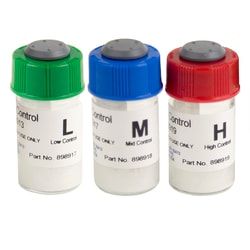
R&D Systems™ Quantikine Immunoassay Control Set 913 for Mouse HS TNF-a
Manufacturer: R&D Systems™
Select a Size
| Pack Size | SKU | Availability | Price |
|---|---|---|---|
| Each of 1 | QC228-Each-of-1 | In Stock | ₹ 17,043.55 |
QC228 - Each of 1
In Stock
Quantity
1
Base Price: ₹ 17,043.55
GST (18%): ₹ 3,067.839
Total Price: ₹ 20,111.389
Content And Storage
Store the unopened product at 2°C to 8°C. Do not use past expiration date.
Gene ID (Entrez)
7124 (Human); 21926 (Mouse); 24835 (Rat); 397086 (Porcine); 280943 (Bovine); 403922 (Canine); 100033834 (Equine); 493755 (Feline); 100009088 (Rabbit)
Product Name
Immunoassay Control Set 913
Target Gene
Tumor Necrosis Factor
Type
Control Set for ELISA Kit
Intended Use
For quantitative measurement of Tumor Necrosis Factor protein levels
Source
Mouse
Related Products
Description
- Tumor necrosis factor alpha (TNF-α), also known as cachectin and TNFSF2, is prototypic ligand of TNF superfamily
- It is pleiotropic molecule that plays central role in inflammation, apoptosis, and immune system development
- TNF-α is produced by wide variety of immune and epithelial cell types
- Human TNF-α consists of 35 amino acid (aa) cytoplasmic domain, a 21 aa transmembrane segment, and 177 aa extracellular domain (ECD)
- Within ECD, human TNF-α shares 97% aa sequence identity with rhesus and 71% to 92% with bovine, canine, cotton rat, equine, feline, mouse, porcine, and rat TNF-α
- The 26 kDa type 2 transmembrane protein is assembled intracellularly to form noncovalently linked homotrimer
- Ligation of this complex induces reverse signaling that promotes lymphocyte costimulation but diminishes monocyte responsiveness
- Cleavage of membrane bound TNF-α by TACE/ADAM17 releases 55 kDa soluble trimeric form of TNF-α
- TNF-α trimers bind ubiquitous TNF RI and hematopoietic cell-restricted TNF RII, both of which are also expressed as homotrimers
- TNF-α regulates lymphoid tissue development through control of apoptosis
- It also promotes inflammatory responses by inducing activation of vascular endothelial cells, macrophages
- TNF-α is key cytokine in development of several inflammatory disorders
- It contributes to development of type 2 diabetes through its effects on insulin resistance and fatty acid metabolism
- Storage: Store unopened product at 2 to 8°C
- Do not use past expiration date.