922676
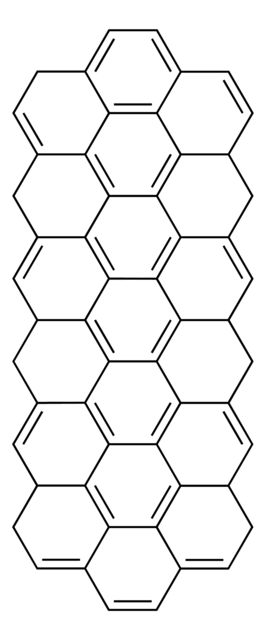
Graphene nanoribbon
oxidatively splitted from CNT
Manufacturer: Sigma Aldrich
CAS Number: 1034343-98-0
Synonym(S): GNRs, Graphene nanoribbon made by oxidative splitting of CNT
Select a Size
| Pack Size | SKU | Availability | Price |
|---|---|---|---|
| 100 MG | 922676-100-MG | In Stock | ₹ 38,158.13 |
922676 - 100 MG
In Stock
Quantity
1
Base Price: ₹ 38,158.13
GST (18%): ₹ 6,868.463
Total Price: ₹ 45,026.593
description
Made by oxidative splitting of CNT
Quality Level
100
Assay
≥80% carbon basis (EA)
size
≥0.0002 mm , Nanoribbon
width
≥200 nm , Nanoribbon
Other Options
| Image | Product Name | Manufacturer | Price Range | |
|---|---|---|---|---|
Strem, An Ascensus Company CAS 1034343-98-0. 50ml. Graphene oxide (4mg/ml water dispersion). | -- | ₹ 8,316.43 | ||
Strem, An Ascensus Company CAS# 1034343-98-0. 100g. Graphene nanoplatelets aggregates (sub-micron particles, surface area 500m2/g). MFCD00144065 | -- | ₹ 12,628.66 | ||
Sigma Aldrich Fine Chemicals Biosciences Graphene powder, electrical conductivity >103 S/m | 1034343-98-0 | 500MG | -- | ₹ 42,300.86 | ||
Strem, An Ascensus Company CAS 1034343-98-0. 250ml. Graphene oxide (4mg/ml water dispersion). | -- | ₹ 33,368.40 | ||
Strem, An Ascensus Company CAS 1034343-98-0. 1pc. Monolayer High Strength Metallurgical Graphene HSMG on PMMA (10x10 mm). | -- | ₹ 12,628.66 | ||
Graphene | -- | ₹ 42,030.00 | ||
Single-layer graphene sheets for battery | -- | ₹ 56,710.00 | ||
Graphene nanoribbon | -- | ₹ 20,260.00 | ||
R2R Monolayer small grain CVD graphene on copper foil | -- | ₹ 93,506.35 | ||
R2R Monolayer large grain CVD graphene on silicon wafer | -- | ₹ 70,936.23 |
Related Products
Description
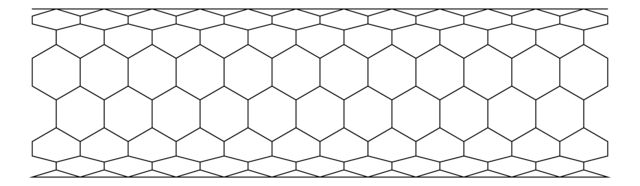
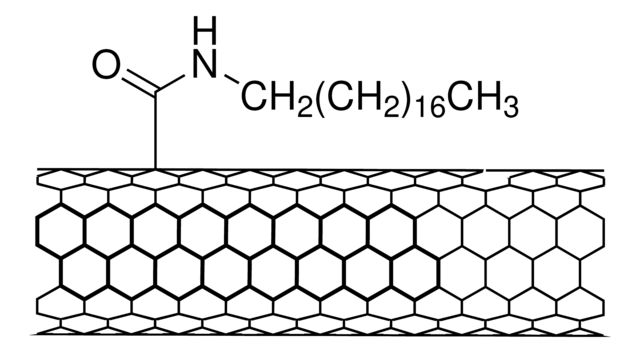
- General description: Graphene nanoribbons (GNR) are narrow strips of graphene with abundant edges and high aspect ratio. The edge functionalization can alter the chemical properties of the GNR to afford them good dispersibility and strong interfacial interactions with various materials. Such properties have made GNR suitable for producing a variety of composites, particularly as conductive fillers that provide percolation at a comparatively small mass loading due to the high aspect ratio and high conductivity. GNR have been used in sensors, energyconversion/storage devices, and electrochemical, photochemical and thermoelectrical systems. They have also been intensively studied for biochemical and biological applications such as bioimaging, biosensing, DNA sequencing, and neurophysiological recovery.
- Application: Graphene nanoribbons (GNR) made by oxidative splitting of carbon nanotubes exhibit good solubility in a number of polar solvents such as water and ethanol. These nanoribbons can be easily exfoliated into single-layer ribbons upon sonication[1][2][3].
SAFETY INFORMATION
WGK
WGK 3
Flash Point(F)
Not applicable
Flash Point(C)
Not applicable