4531245
Thermo Scientific™ MA(PEG)24 Methyl-PEG-Amine Compound
MA(PEG)n: methyl- and amine-capped polyethylene glycol compounds containing 4 to 24 PEG units; use for surface-modification and molecule-pegylation applications.
Manufacturer: Fischer Scientific
The price for this product is unavailable. Please request a quote
Chemical Reactivity
Aldehyde
Content And Storage
Upon receipt store product at -20°C protected from moisture. Product is shipped at ambient temperature.
Reactive Moiety
Amine, Primary Amine
Form
Solid
Product Type
Amine Compound
Description
Pierce MA(PEG)12
Label Type
Polyethylene Glycol (PEG), Blocking Groups
Spacer
12 ethylene glycol units
Solubility
Water
Related Products

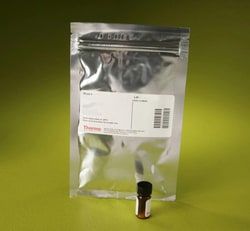

Description
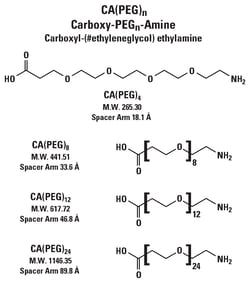
- Thermo Scientific™ Pierce MA(PEG)n Compounds are methyl- and amine-terminated polyethylene glycol reagents, where n equals 4 to 24 PEG units, that are useful for a variety of surface-modification and molecule-pegylation applications
- MA(PEG) n compounds have the form Methyl-PEG n -Amine and are ideal for derivatizing surfaces and molecules with discrete numbers (n = 4, 8, 12, 24) of ethylene glycol groups
- Use any amine-reactive chemistry (e.g., EDC or NHS ester) to PEGylate surfaces, proteins, or other molecules with a precise number of hydrophilic, nonimmunogenic PEG units
- Highlights: Pure compounds of specific size ensure complete control of PEGylation Straight-chain compounds with simple terminal primary amine Adaptable to a variety of modification procedures Recommended for: PEGylate carboxylate or amine surfaces Add inert mass to proteins, immunogens, drug compounds and probes Improve solubility (decrease aggregation) of proteins or peptides without affecting function Protect proteins from proteolysis