ABN1669M
Anti-Anoctamin-1 (TMEM16A)
from rabbit
Manufacturer: Sigma Aldrich
Synonym(S): Anoctamin-1, TMEM16A
Select a Size
| Pack Size | SKU | Availability | Price |
|---|---|---|---|
| 200 μL | ABN1669M-200-μL | In Stock | ₹ 41,010.01 |
ABN1669M - 200 μL
In Stock
Quantity
1
Base Price: ₹ 41,010.01
GST (18%): ₹ 7,381.802
Total Price: ₹ 48,391.812
biological source
rabbit
Quality Level
100
antibody form
affinity isolated antibody
antibody product type
primary antibodies
clone
polyclonal
species reactivity
human, mouse
species reactivity (predicted by homology)
rat (based on 100% sequence homology)
packaging
antibody small pack of 25 μL
technique(s)
immunocytochemistry: suitableimmunofluorescence: suitablewestern blot: suitable
isotype
IgG
Related Products
Description
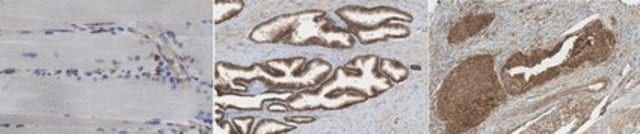
- General description: Anoctamin-1 (UniProt: Q8BHY3; also known as Transmembrane protein 16A, TMEM16A) is encoded by the Ano1 (also known as Tmem16a) gene (Gene ID: 101772) in murine species. Anoctamin-1 is a multi-pass membrane protein that along with TMEMB16B subunit serves as the calcium-activated chloride channels (CaCC). Two isoforms of Anoctamin-1 have been reported that are produced by alternative splicing. It is located in the apical membranes of epithelial cells in exocrine glands and in trachea. Its airway epithelial expression is increased in asthmatics. Hence, its abundance and activity may contribute to mucus secretion and airway hyper-responsiveness in asthma subjects. Anoctamin-1 is reported to be absent from smooth muscle cells, but present in the interstitial cells of Cajal (ICC), the pacemaker cells that control smooth muscle contraction. It acts as a major contributor to basal and stimulated chloride conductance in airway epithelial cells and plays an important role in tracheal cartilage development. ATP and calmodulin are shown to be essential for its activation and the channel activity is inhibited by CFTR protein and by chloride channel inhibitors such as niflumic acid and 4, 4 -diisothiocyanatostilbene-2,2′-disulfonic acid (DIDS). Mice with defective Tmem16a gene display severe tracheomalacia with gaps in the tracheal cartilage rings along the entire length of the trachea and over 90% of mutants die within the first nine days of postnatal life.
- Specificity: This rabbit polyclonal antibody detects Anoctamin-1/TMEM16A in human and murine cells. it targets an epitope within 14 amino acids from the N-terminal end. May react with both isoforms 1 and 2 based on sequence homology.
- Immunogen: A linear peptide corresponding to 14 amino acids from the N-terminal region of murine Anoctamin-1 (TMEM16A).
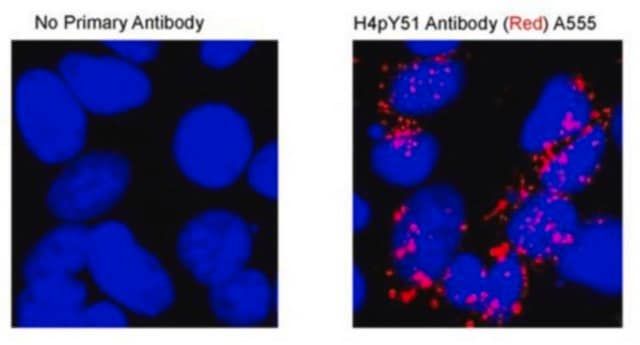
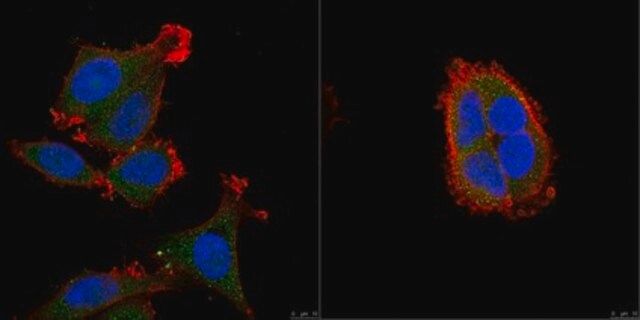
- Application: Anti-Anoctamin-1 (TMEM16A), Cat. No. ABN1669, is a highly specific rabbit polyclonal antibody that targets Anoctamin-1 (Transmembrane protein 16A) and has been tested for use in Immunocytochemistry, Immunofluorescence, and Western Blotting..
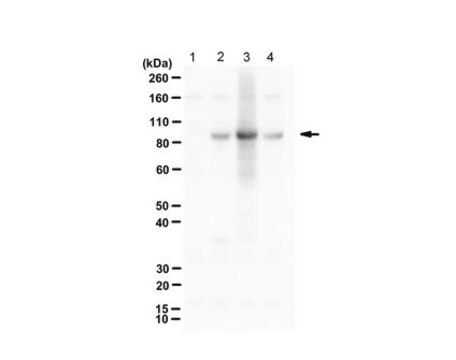
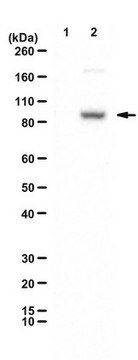
- Quality: Evaluated by Western Blotting in A431 cell lysate.Western Blotting Analysis: A 1:500 dilution of this antibody detected Anoctamin-1 (TMEM16A) in 10 µg of A431 cell lysate.
- Target description: ~111 kDa observed; 110.92 kDa calculated. Uncharacterized bands may be observed in some lysate(s).
- Physical form: Affinity Purified
- Storage and Stability: Stable for 1 year at 2-8°C from date of receipt.
- Other Notes: Concentration: Please refer to lot specific datasheet.
- Disclaimer: Unless otherwise stated in our catalog or other company documentation accompanying the product(s), our products are intended for research use only and are not to be used for any other purpose, which includes but is not limited to, unauthorized commercial uses, in vitro diagnostic uses, ex vivo or in vivo therapeutic uses or any type of consumption or application to humans or animals.
SAFETY INFORMATION
WGK
WGK 1