P6407
Poly-ᴅ-Lysine Hydrobromide
synthetic, mol wt 70,000-150,000, powder, γ-irradiated, suitable for cell culture, BioXtra
Manufacturer: Sigma Aldrich
CAS Number: 27964-99-4
Synonym(S): PDL
Select a Size
| Pack Size | SKU | Availability | Price |
|---|---|---|---|
| 5 MG | P6407-5-MG | In Stock | ₹ 9,834.60 |
| 10 X 5 MG | P6407-10-X-5-MG | In Stock | ₹ 71,761.50 |
P6407 - 5 MG
In Stock
Quantity
1
Base Price: ₹ 9,834.60
GST (18%): ₹ 1,770.228
Total Price: ₹ 11,604.828
product name
Poly-D-lysine hydrobromide, mol wt 70,000-150,000, lyophilized powder, γ-irradiated, BioReagent, suitable for cell culture
biological source
synthetic (organic)
Quality Level
200
sterility
γ-irradiated
product line
BioReagentBioXtra
form
lyophilized powder
mol wt
70,000-150,000
packaging
pkg of 10 X 5 mgpkg of 5 mg
concentration
0.016—0.032 mmol lysine
technique(s)
cell culture | mammalian: suitable
Other Options
Related Products

Description
- Application: Poly-D-lysine hydrobromide has been used: as a coating for plates used in culturing rat glial precursor cells (RGPCS).[1]in coating flasks and plates in culturing tanycytes[2]in preparing the surface of coverslips for facilitating cell attachment[3]
- Biochem/physiol Actions: Poly-D-lysine (PDL) hydrobromide is a nonspecific attachment factor for cells useful in promoting cell adhesion to solid substrates by enhancing electrostatic interaction between negatively charged ions of the cell membrane and the culture surface. After absorption to the culture surface, poly-D-lysine increases the number of positively charged cell binding sites.
- Features and Benefits: Sterilized using gamma (γ) radiation. Sterile Poly-D-Lysine solutions can be stored for three years when stored at 2-8˚C.
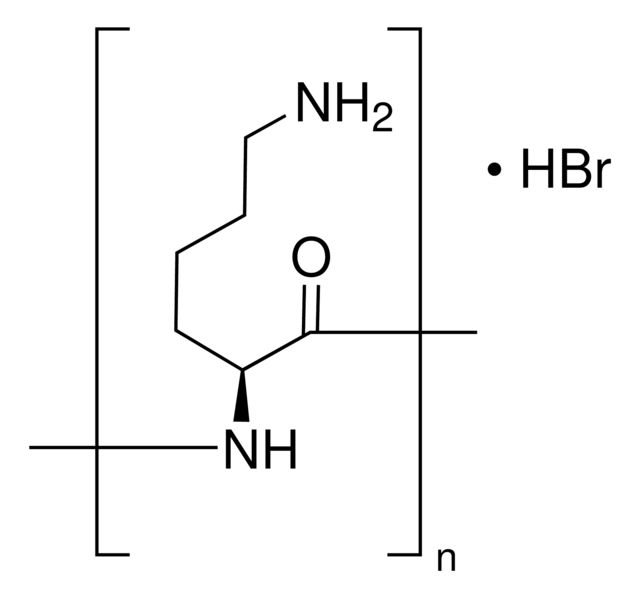
- Components: Poly-D-lysine is a positively charged amino acid polymer with approximately one HBr per lysine residue. The hydrobromide allows the poly-D-lysine to be in a crystalline form soluble in water. A small amount of product may be found in the ß structure because the HBr interferes with hydrogen bonding between amino and either the carboxyl groups or N or O containing moieties.
- Caution: Sterile solutions are stable for up to 2 years when stored at 2-8°C. It should be stored desiccated at -20°C.
- Preparation Note: This product has a molecular weight of 70,000-150,000 and is cell culture tested and gamma-irradiated. To remove the HBr, dissolve this product in a neutral buffer and dialyze to remove the salts. In general, to use this product as an attachment factor, add 50 mL of sterile tissue culture grade water to 5 mg of poly-lysine, and aseptically coat the surface with 1 mL per 25 cm2 of solution. After 5 minutes, remove the solution through aspiration and thoroughly rinse the surface. Let dry for two hours before introducing cells and medium.
SAFETY INFORMATION
WGK
WGK 3
Flash Point(F)
Not applicable
Flash Point(C)
Not applicable
Personal Protective Equipment
dust mask type N95 (US), Eyeshields, Gloves