G8415
L-Glutamic acid
98.5-100.5%, suitable for cell culture, non-animal source, meets EP testing specifications
Manufacturer: Sigma Aldrich
CAS Number: 56-86-0
Synonym(S): (S)-2-Aminopentanedioic acid, Glu
Select a Size
| Pack Size | SKU | Availability | Price |
|---|---|---|---|
| 10 MG | G8415-10-MG | In Stock | ₹ 2,403.15 |
| 100 G | G8415-100-G | In Stock | ₹ 5,470.00 |
| 1 KG | G8415-1-KG | In Stock | ₹ 17,580.00 |
G8415 - 10 MG
In Stock
Quantity
1
Base Price: ₹ 2,403.15
GST (18%): ₹ 432.567
Total Price: ₹ 2,835.717
biological source
non-animal source
Quality Level
300
Agency
meets EP testing specifications
Assay
98.5-100.5%
form
powder
technique(s)
cell culture | mammalian: suitable
impurities
endotoxin, tested
color
white
mp
205 °C (dec.) (lit.)
solubility
1 M HCl: 100 mg/mL
Other Options
Related Products
Description
- Application: L-Glutamic acid has been used as a supplement in for cell culture media to culture hippocampal neurons and hT-PA (human tissue plasminogen activation) producing cell line.[1][2][3]
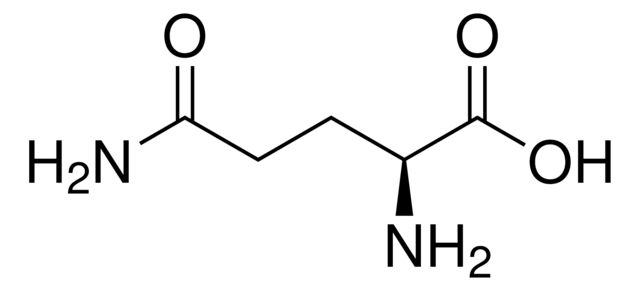
- Biochem/physiol Actions: Glutamic acid, or glutamate, the salt form of glutamic acid, functions as a neurotransmitter and also serves as a precursor to other neurotransmitters such as γ-aminobutyric acid.[4] Glutamic acid also plays a key role in many metabolic pathways, that controls growth, reproduction, maintenance and immunity.[5] It is converted to α-ketoglutarate, a key component of the TCA (tricarboxylic acid) cycle, and a precursor for the biosynthesis of nucleic acids and certain amino acids.[5][6] In cells, glutamine is converted to glutamate by the enzyme glutaminase.[6] Glutamine serves as a source of energy for rapidly dividing cells comprising lymphocytes, enterocytes, macrophages and tumors. Glutamine mediates protein turnover via cellular mTOR (mammalian target of rapamycin) signaling. It is also known to be associated with the inhibition of apoptosis.[5]
SAFETY INFORMATION
WGK
WGK 1
Flash Point(F)
Not applicable
Flash Point(C)
Not applicable
Personal Protective Equipment
dust mask type N95 (US), Eyeshields, Gloves