P6887
Pepsin from porcine gastric mucosa
lyophilized powder, ≥3,200 units/mg protein
Manufacturer: Sigma Aldrich
CAS Number: 9001-75-6
Synonym(S): Pepsin A, Pepsin from hog stomach
Select a Size
| Pack Size | SKU | Availability | Price |
|---|---|---|---|
| 250 MG | P6887-250-MG | In Stock | ₹ 9,068.70 |
| 1 G | P6887-1-G | In Stock | ₹ 25,086.00 |
| 5 G | P6887-5-G | In Stock | ₹ 73,437.60 |
| 10 G | P6887-10-G | In Stock | ₹ 1,26,928.50 |
P6887 - 250 MG
In Stock
Quantity
1
Base Price: ₹ 9,068.70
GST (18%): ₹ 1,632.366
Total Price: ₹ 10,701.066
biological source
Porcine gastric mucosa
Quality Level
300
grade
Proteomics Grade
form
lyophilized powder
specific activity
≥3,200 units/mg protein
mol wt
35 kDa
impurities
salt, essentially free
color
white to off-white
solubility
deionized water: soluble 10 mg/mL10 mM HCl: soluble 4.0 mg/mL (Cold)
UniProt accession no.
P00791
Other Options
Related Products
Description
- Application: Pepsin from Sigma has been used along with other enzymes for the determination of enzyme-resistant starch (RS) in bread.[1] It has also been used to simulate in vitro gastrointestinal digestion of pea or whey protein isolates.[2]
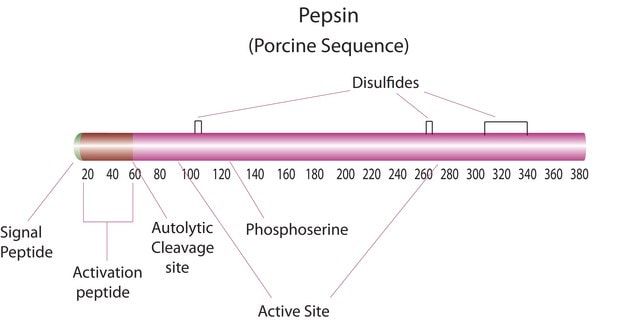
- Biochem/physiol Actions: Unlike many other peptidases, pepsin hydrolyzes only peptide bonds, not amide or ester linkages. The cleavage specificity includes peptides with an aromatic acid on either side of the peptide bond, especially if the other residue is also an aromatic or a dicarboxylic amino acid. Increased susceptibility to hydrolysis occurs if there is a sulfur-containing amino acid close to the peptide bond, which has an aromatic amino acid. Pepsin will also preferentially cleave at the carboxyl side of phenylalanine and leucine, and to a lesser extent at the carboxyl side of glutamic acid residues. It does not cleave at valine, alanine, or glycine linkages.[4] Z-L-tyrosyl-L-phenylalanine, Z-L-glutamyl-L-tyrosine, or Z-L-methionyl-L-tyrosine may be used as substrates for pepsin digestion.[4][5] Pepsin is inhibited by several phenylalanine-containing peptides.[6]
- Unit Definition: One unit will produce a ΔA280 of 0.001 per min at pH 2.0 at 37°C, measured as TCA-soluble products using hemoglobin as substrate. (Final volume = 16 ml. Light path = 1 cm.)
- Analysis Note: Optimum pH is 2-4. Active in 4 M urea and 3 M guanidine HCl. Stable at 60 °C. Pepsin is irreversibly inactivated at pH 8.0 - 8.5.
- Other Notes: View more information on pepsin at www.sigma-aldrich.com/enzymeexplorer.
SAFETY INFORMATION
Pictograms
Signal Word
Danger
Hazard Statements
Precautionary Statements
P261 - P264 - P271 - P280 - P302 + P352 - P305 + P351 + P338
Hazard Classifications
Eye Irrit. 2 - Resp. Sens. 1 - Skin Irrit. 2 - STOT SE 3
Target Organs
Respiratory system
WGK
WGK 1
Flash Point(F)
Not applicable
Flash Point(C)
Not applicable
Personal Protective Equipment
dust mask type N95 (US), Eyeshields, Gloves